Educatio Novae Pangaeae: libera, personalis, perpetua. Technologia servit curiositati; humanitas et sapientia in harmonia permanent [Latin] - Education of New Pangea: free, personal, perpetual. Technology serves curiosity; humanity and wisdom remain in harmony
The mind is not a vessel to be filled according to a timetable, nor a certificate to be stamped. It is a living fire that each person tends in their own time, in their own way, for as long as wonder lasts. - First Coordinator of Lifelong Learning, Address to the Global Assembly on the Dissolution of Compulsory Schooling, Year 12 of the New Calendar
Lifelong Learning Without Compulsion in New Pangea
Education and public service in New Pangea were among the earliest institutions to be fundamentally re-imagined after the Revolution. The old model—compulsory schooling prescribed by the state, age-graded cohorts, standardised curricula, competitive examinations, and the lifelong pursuit of certificates—had been recognised as both inefficient and corrosive. It treated minds as raw material to be processed on a common assembly line and measured success by the accumulation of credentials rather than by the depth of understanding or the quality of contribution. In its place the Ministry of Lifelong Learning established a system that is voluntary, radically personalised, and continuous across an entire lifetime.
The earliest education a child receives is determined by the parents and, more importantly, by the child. There are no compulsory schools and no mandated starting age. Most families begin with a gentle introduction to language, number, and the natural world through conversation, play, and shared exploration. Teaching aids—highly sophisticated, adaptive digital tutors available through the planetary network—provide the standard basics when the child is ready. These aids adjust continuously to the individual’s pace, preferred sensory modalities, and emerging interests. One child may absorb mathematics through music and spatial puzzles; another may learn literacy through storytelling and drawing; a third may leap ahead into ecology because a garden or a stream has captured their attention. Depth and specificity are never imposed. The system simply responds.
Because learning is not confined to a classroom or a timetable, it spills naturally into the life of the household and the community. Children accompany adults in gardens, workshops, kitchens, and local hubs. They watch, ask, imitate, and gradually take on real tasks. The old separation between “school” and “life” has largely dissolved. By the time a young person reaches what was once considered secondary-school age, many have already developed substantial competence in areas that interest them—botany, coding, mechanics, music, languages, design—without ever having sat a formal examination.
Further education, if desired, continues throughout life according to the interests of the person. There is no upper age limit and no requirement to specialise early or to complete any particular sequence. A citizen may spend years deepening knowledge of marine ecology, then shift to ceramics, then to orbital mechanics during a Laurasia residency, then to the history of pre-revolutionary economics. Learning resources—immersive simulations, real-time expert conversations, laboratory access, archival materials, and peer study circles—are freely available through the network and through physical community centres that have replaced the old school buildings. These centres function as open workshops, libraries, studios, and quiet rooms rather than as institutions of compulsion. Attendance is never required; the doors simply remain open.
No awards or certificates are issued. The post-revolutionary settlement recognised that credentials had become a secondary currency, often valued more for the doors they opened than for the competence they purported to measure. In a society that has largely abolished scarcity of opportunity and that selects people for tasks on the basis of demonstrated ability and willingness rather than paper qualifications, the certificate became superfluous. A person who wishes to contribute to a research project, a construction crew, a medical team, or a planetary logistics group simply shows what they can do—through prior work, through a short practical demonstration, or through a period of supervised collaboration. Reputation travels through direct experience and through the transparent records that individuals choose to keep of their own learning and service. The absence of formal awards has not produced chaos; it has produced a quieter, more honest form of recognition.
Public service is the natural counterpart of this educational freedom. Because the basic material needs of life are met and because coercive employment has ended, contribution to the common good is voluntary. Many citizens choose to devote substantial portions of their time to tasks that benefit others: maintaining the maglev networks, tending communal gardens and forests, supporting the orbital stations, caring for elders and children, advancing scientific understanding, or preserving cultural memory. These activities are not performed for wages or for career advancement. They are performed because the work is meaningful, because the community has need of it, and because the individual finds satisfaction in competence exercised for a purpose larger than the self.
The relationship between education and public service is reciprocal and fluid. A person who becomes fascinated by closed-loop ecology may spend years studying and then apply that knowledge in the design of new suburban habitats or in the life-support systems of a Laurasia station. Another who loves languages may help maintain the translation layers of the planetary network or teach newcomers. A third who is drawn to the history of technology may curate the heritage vehicle parks or the pre-revolutionary museums. Service itself becomes a form of continued learning; learning continually opens new avenues of service. There is no sharp boundary between the two.
The technological infrastructure that supports this model is sophisticated yet deliberately unobtrusive. Adaptive tutors employ advanced models that track understanding in real time and present material in the form most likely to engage the individual learner. Immersive environments allow a child in a garden suburb to walk the surface of Mars, dissect a virtual organism, or conduct a chemistry experiment without physical risk. High-bandwidth links connect learners to mentors anywhere on the planet or aboard the orbital stations. Yet the technology never dictates the path. It remains a tool that responds to curiosity rather than a system that channels it.
Critics of the early post-revolutionary period sometimes feared that the absence of compulsion and certification would produce widespread ignorance or inequality of knowledge. The opposite has occurred. Because learning is driven by genuine interest, retention and depth are markedly higher than under the old regime of enforced attendance and high-stakes testing. Because resources are abundant and access is universal, the former correlation between family wealth and educational opportunity has disappeared. Children from every background encounter the same rich digital and physical environment. Differences in outcome still exist—some minds race ahead in particular domains while others move more slowly or in different directions—but these differences are treated as natural variations rather than as failures of the system.
The social atmosphere that surrounds education has changed as well. Anxiety about grades, ranking, and future employability has largely evaporated. Young people are not sorted into winners and losers at successive stages of a competitive hierarchy. Adults are not defined by the highest certificate they once obtained. Conversation about learning tends to focus on what is being discovered rather than on how it will be rewarded. The result is a culture in which intellectual life is quieter, more sustained, and less performative.
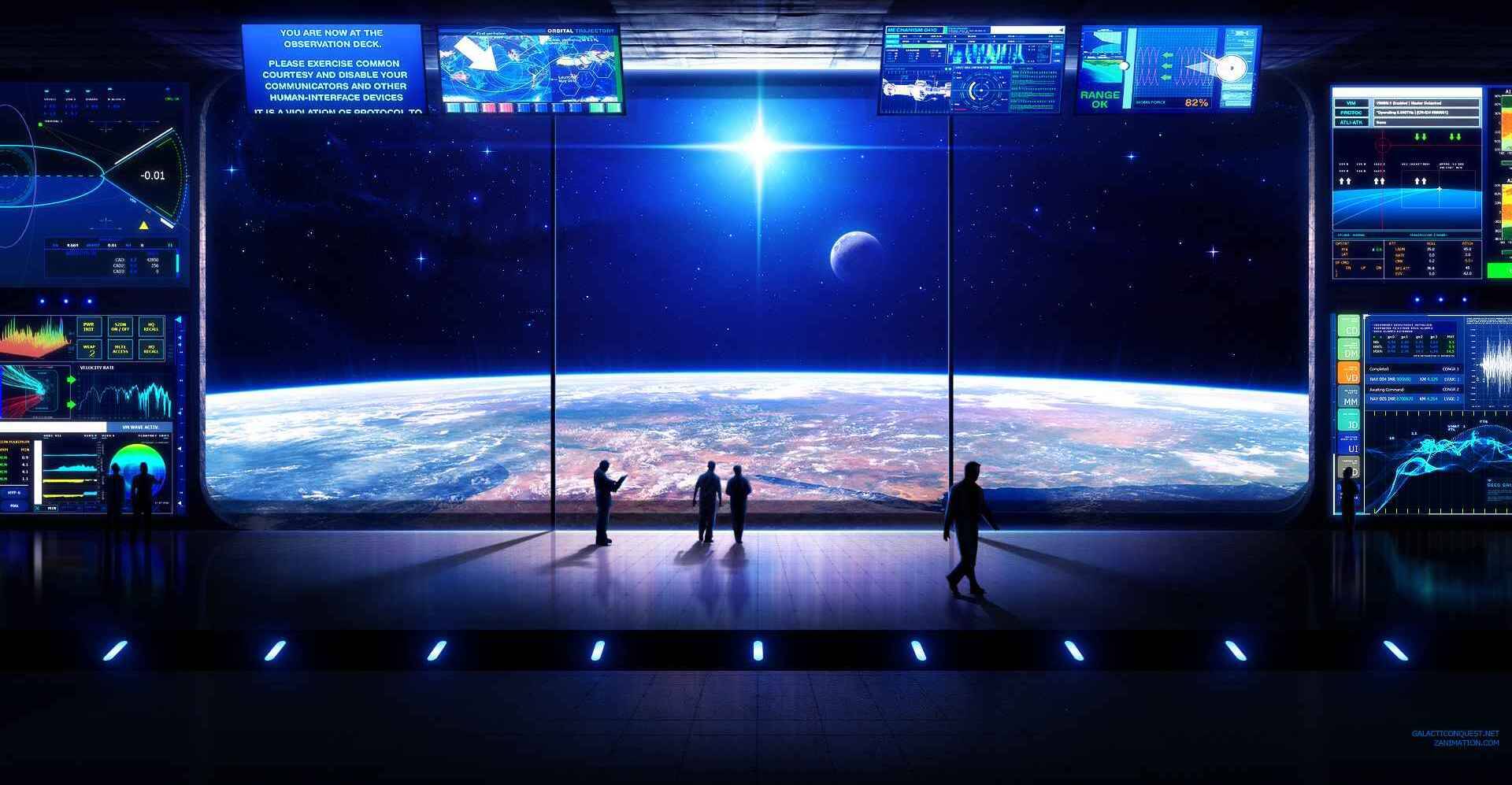
Integration with the wider systems of New Pangea is seamless. The same ground-cars and maglev networks that carry people to gardens and hubs also carry them to workshops and observation sites. A six-month residency on a Laurasia station is itself a profound educational experience, whether or not the resident enrols in formal courses. The heritage parks preserve older technologies not as nostalgia alone but as living classrooms where the history of energy, transport, and materials can be touched and understood. Even the ordinary rhythms of daily life—growing food, maintaining dwellings, participating in local decision-making—serve as continuous informal education in ecology, engineering, and civic responsibility.
Looking forward, the Ministry of Lifelong Learning continues to refine the supporting tools while carefully resisting any drift back toward prescription. Research focuses on still more responsive tutors, on better methods for connecting learners with complementary peers, and on preserving the conditions of unforced attention in an age of abundant information. The fundamental architecture, however, remains stable: education begins with the child and the family; it continues for as long as the individual desires; it is supported generously by technology and community; and it is never measured by certificates. Public service arises from the same soil of free interest and finds its reward in the work itself and in the quiet regard of others.
In New Pangea a person may live an entire life without ever receiving a diploma, a degree, or a professional licence. They may nevertheless become deeply learned, highly skilled, and widely useful. The old question—“What are you going to be?”—has lost much of its urgency. The more common question is simply “What are you curious about now?” From that question, freely answered across decades, both education and public service continually renew themselves.
The system is not perfect. Some individuals remain uninterested in formal learning for long periods; others pursue narrow enthusiasms to the exclusion of broader understanding. The society accepts these variations without panic. It trusts that the conditions of freedom, abundance, and meaningful opportunity will, over a lifetime, draw most people toward competence and contribution in their own time and in their own way. That trust has so far been justified.
Thus education and public service stand as complementary expressions of the same post-revolutionary insight: human beings learn best and serve best when they are not compelled. Technology multiplies the possibilities; the absence of coercion protects the integrity of the mind. In the quiet spaces of homes, gardens, workshops, hubs, and orbital stations, curiosity continues to do its ancient work—unhurried, ungraded, and alive.